




Listen to the weekly archive 24 hours a day 7 days a week on demand.

Easy Does It-Perennials For Beginners
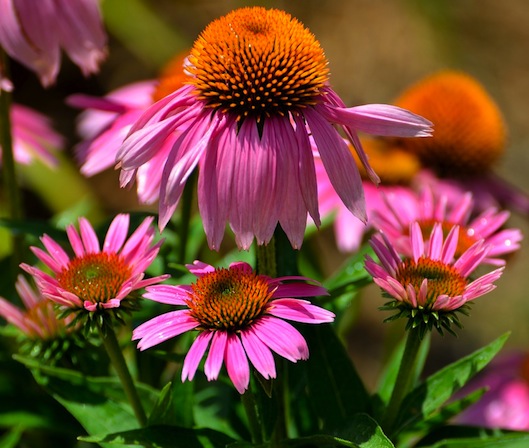
Echinacea (Purple Coneflower) will do well in full to half day sun and reward you with long-lasting cut flowers late summer to fall. It mixes well with other plants and looks particularly good next to yellow. Very drought-tolerant. Zone 4-10
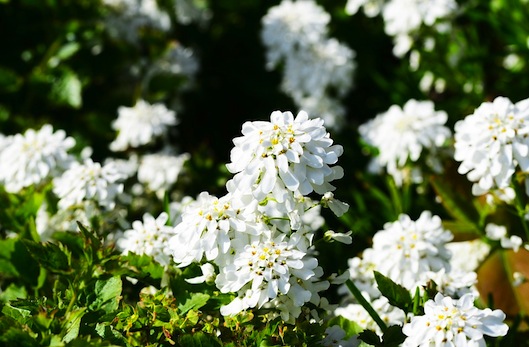
Rudbeckia (Black Eyed Susan) does best in full sun and is another winner if you like cut flowers. It doesn't mind long dry spells and is a good mixer. A nice long bloom period is an added bonus. Flowers late summer/fall. Zone 2-11 Iberis sempervirens (Candytuft) is an early spring bloomer that resembles a mound of cotton candy. It benefits from being sheared back after blooming, but requires no other special care. A good front of the border plant. Zone 3-8 Sedum "Autumn Joy" blooms start out blushing pink and gradually evolve to a rusty red in late summer. They'll take anything from part shade to full sun and have the added advantage of being deer and rabbit-resistant. Zone 3-11 Lilium lancifolium (Tiger Lilies) Yeah, they're ubiquitous to the point of being boring for some. But you'd be hard pressed to find a hardier perennial. Tiger Lilies will grow in almost any soil, in any kind of light, and bloom in the wettest or most arid conditions. If you think you can't grow anything, Tiger Lilies will give you confidence! Zone 3-9 Senecio cineraria (Dusty Miller) A nice filler for the border, with lobed, silver-gray foliage that looks great next to many colors. Dusty Miller seldom blooms, but no matter...it's all about the foliage with this easy-care perennial. Zone 8-10, although it will often carry over in colder climates if the winter is mild or it has protection. There's no need to limit yourself to these plants. Your local garden center can advise you on other easy choices that will do well in your climate. Steering clear of the difficult subjects and sticking to low maintenance garden friends will turn your black thumb green and perhaps give you the confidence to tackle trickier plants in the future. Easy does it!
Charlotte
|
 Beginning gardeners who plant perennials sometimes get discouraged when the flowering plants they pick fail to do well. Often, the problem lies not with the gardener but with their plant choices. Like people, some perennials are fussier than others. Opting for plants that tolerate a wider range of light, water, and soil conditions and are relatively pest-resistant makes gardening success more likely. Here are a few reliable favorites that won't quit on you when conditions are less than perfect.
 Dicentra eximia (Bleeding Heart) is a late-spring beauty that thrives in shady locations. Both the fringed foliage and the heart-shaped flowers are attractive. Bleeding Heart doesn't like extended periods of dry weather and will need supplemental watering during a drought, but is otherwise bullet-proof. Zone 3-9